

Designer Clothes: A Guide
Introduction
Designer clothing sits at the intersection of art, craftsmanship, and status. It’s more than just an expensive label — it represents a designer’s creative vision, a house’s history, and often decades of technique passed down through skilled ateliers. This guide breaks down what “designer” really means, why these pieces cost what they do, whether they’re worth buying, and how to build a wardrobe that actually holds up over time.
A Quick Look at the History
Before the mid-1800s, clothing was made by anonymous tailors with no individual credit. That changed with Charles Frederick Worth, who began sewing his name into garments in 1850s Paris — effectively inventing the modern fashion designer. Over the following century, names like Coco Chanel, Christian Dior, and Cristóbal Balenciaga turned fashion into a recognized art form. By the 1960s, ready-to-wear collections made designer fashion more accessible, and by the 1980s and 90s, visible logos turned clothing into status symbols. Today’s landscape blends streetwear, sustainability concerns, and a booming resale market.
What Makes Clothing “Designer”?
Designer clothing refers to garments created by a named fashion designer or house — Chanel, Gucci, Prada, and others — as opposed to mass-produced fast fashion. These pieces are typically made in limited quantities, use premium materials, and follow a distinct creative vision rather than trend-chasing. Within this world there’s a hierarchy: haute couture (custom, hand-sewn, extremely exclusive), ready-to-wear (standard sizes, still high quality), diffusion lines (more affordable sub-brands), and licensed collaborations (designer x mass retailer drops).
Why Designer Clothes Cost So Much
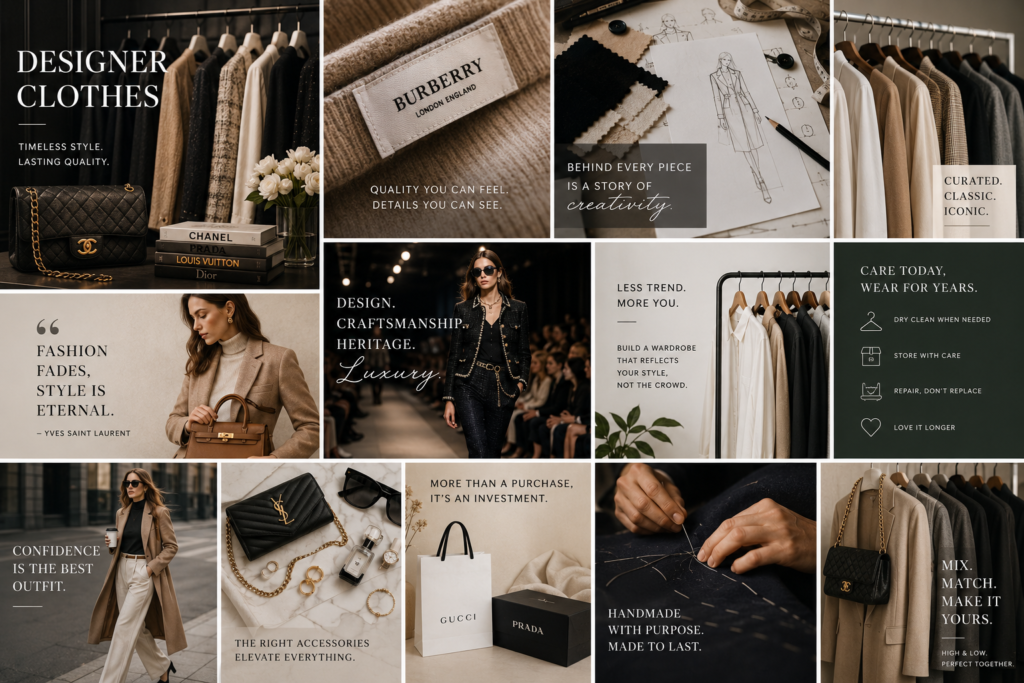
Several real factors drive the price:
- Materials — rare fabrics, fine leather, premium cashmere
- Craftsmanship — hours of skilled, often hand-finished labor
- Design process — sketching, pattern-making, sampling, fittings
- Brand equity — funding runway shows, campaigns, flagship stores
- Scarcity — limited runs increase perceived value
That said, markups often range from 3x to 12x production cost — so you’re paying for materials and labor, but also heavily for brand storytelling and status.
Is It Worth the Investment?
Usually worth it: outerwear, leather goods (bags, shoes), tailored pieces, and timeless classics you’ll wear for years.
Usually not worth it: trend-driven pieces, basic tees/socks, and heavily logo-branded items that date quickly.
A useful test is cost-per-wear: price divided by number of wears. A $1,200 coat worn 100 times costs $12/wear — often cheaper long-term than a $40 top worn twice.
Building a Smart Wardrobe
- Invest in foundational pieces you’ll wear constantly — coat, shoes, bag, trousers.
- Learn to spot quality: tight stitching, good fabric weight, natural fibers, matched seams, full linings.
- Consider secondhand — platforms like The RealReal and Vestiaire Collective offer authenticated designer pieces at lower prices.
- Mix high and low — pair one designer piece with affordable basics for a look that feels intentional, not showy.
- Know your personal style before chasing trends.
- Take care of what you own — proper cleaning, storage, and quick repairs extend a garment’s life for years.
Spotting Fakes
Watch for: prices that seem too good to be true, inconsistent logos or spelling errors, poor stitching, missing authentication cards/dust bags, and sellers with no return policy. Compare hardware weight and finish, font details on tags, and the feel of the fabric or leather against known authentic photos when possible. Buying from the brand directly or a resale platform with in-house authentication is the safest bet.
Caring for Designer Pieces
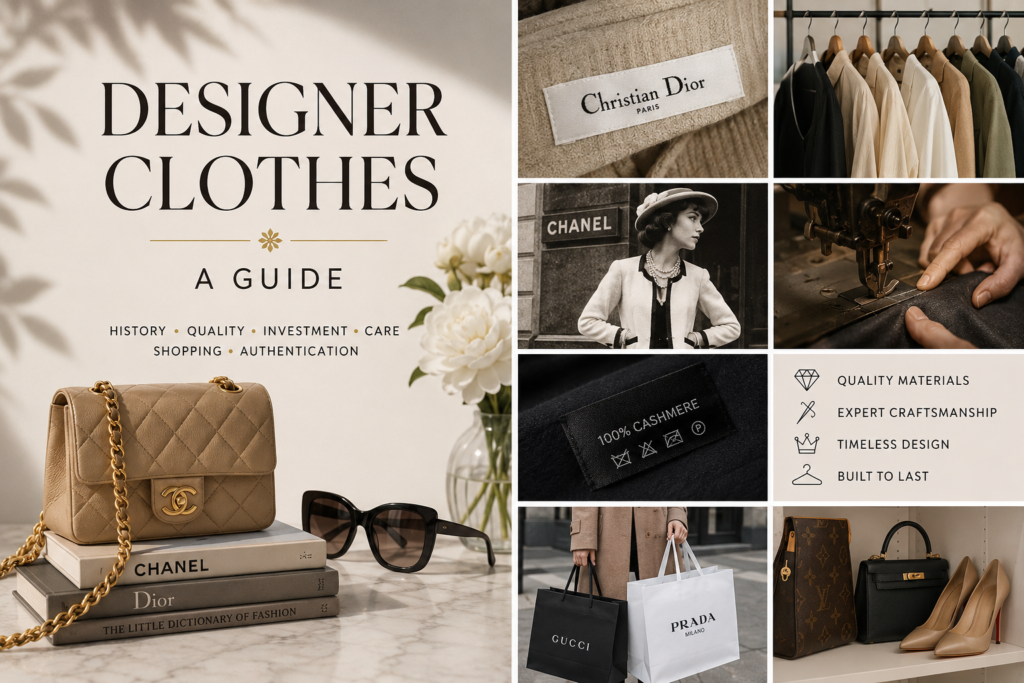
Quality garments can last decades with the right care:
- Dry clean structured pieces (blazers, coats) rather than washing at home.
- Use cedar blocks or lavender sachets to protect wool and cashmere from moths.
- Store properly — hang structured items, fold knitwear to avoid stretching.
- Repair small issues early — a loose button or minor tear only gets worse (and more expensive to fix) if ignored.
- Rotate wear so pieces aren’t overused in a short period, which helps fabric and shape last longer.
Where to Shop Designer Clothes
- Brand flagship stores / official websites — safest option, full price but guaranteed authentic.
- Department stores (Nordstrom, Saks, Selfridges) — carry multiple designer brands under one roof, often with seasonal sales.
- Outlet malls — past-season designer pieces at reduced prices.
- Resale platforms (The RealReal, Vestiaire Collective, Rebag) — authenticated secondhand and archival finds.
- Designer sample sales — deep discounts on overstock and samples, usually announced locally or via mailing lists.
Conclusion
Designer fashion isn’t about blind spending or blanket skepticism — it’s about discernment. Learn what real quality feels like, invest in pieces you’ll actually wear for years, consider secondhand options, and build a wardrobe that reflects your own style rather than someone else’s trend cycle.