

Korean Fashion: A Journey Through Tradition and Modern Style
Korean fashion has captured global attention over the past decade, fueled by the worldwide popularity of K-pop, K-dramas, and Korean beauty culture. But Korean style runs much deeper than what appears on screen — it spans centuries of tradition alongside some of the most influential contemporary streetwear in the world today.
The Hanbok: Korea’s Traditional Dress
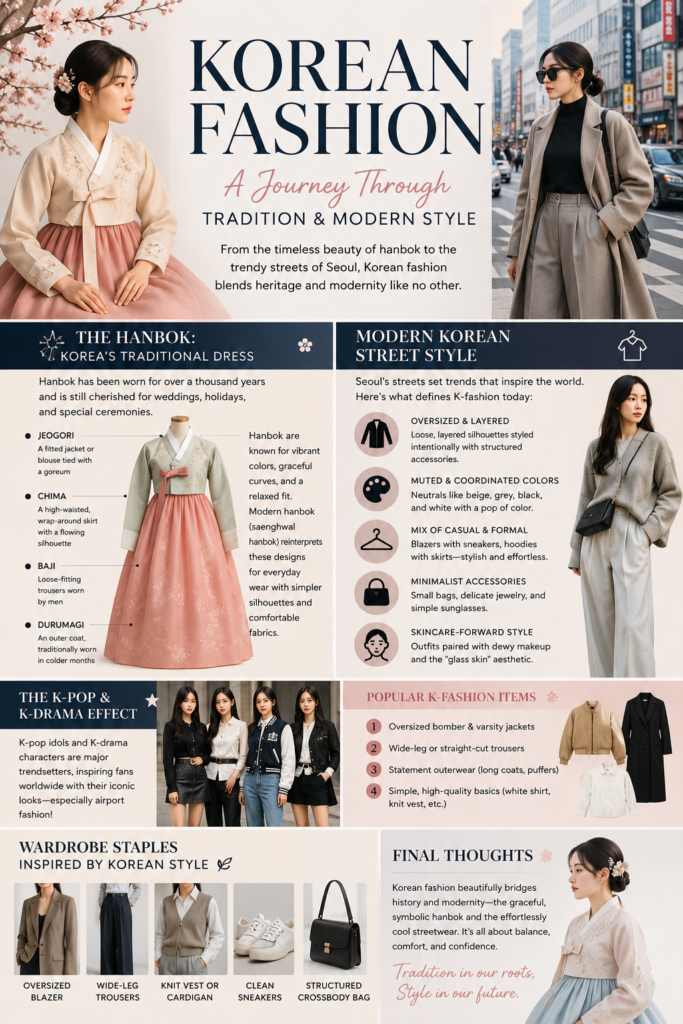
The hanbok is Korea’s traditional clothing, worn for over a thousand years and still donned today for weddings, holidays like Seollal (Lunar New Year) and Chuseok (harvest festival), and other significant ceremonies.
A hanbok typically consists of:
- Jeogori – a fitted jacket or blouse worn on top, tied with a ribbon called a goreum
- Chima – a high-waisted, wrap-around skirt worn by women, known for its flowing silhouette
- Baji – loose-fitting trousers worn by men, paired with a jeogori
- Durumagi – an outer coat, traditionally worn in colder months
Hanbok are known for vibrant color combinations, graceful curves, and a relaxed fit — the garments are designed to move freely with the body rather than cling to it. Traditionally, colors and patterns signified age, marital status, and social rank; bright colors and elaborate embroidery were reserved for children and special occasions, while married adults wore more muted tones.
In recent years, designers have introduced “modern hanbok” (also called saenghwal hanbok) — reinterpretations that simplify the silhouette, use more practical fabrics, and are made for everyday wear rather than only formal occasions. These versions have become popular among younger Koreans who want to honor tradition while keeping comfort and versatility.
Hanbok Through the Seasons
Like modern clothing, traditional hanbok fabric choices have historically shifted with the seasons:
- Spring/Summer hanbok – Lightweight ramie or silk in brighter, airier colors to stay cool in warmer months
- Autumn/Winter hanbok – Heavier silk or cotton blends, sometimes with quilted layers for added warmth
- Modern adaptations – Today’s saenghwal hanbok brands apply these same seasonal principles to everyday wear, using breathable fabrics for summer collections and warmer blends for winter
Modern Korean Street Style
Beyond the hanbok, contemporary Korean fashion — often called “K-fashion” — has become a major global trend in its own right. Seoul neighborhoods like Hongdae, Myeongdong, and Garosugil are considered fashion capitals within Asia, known for setting trends that ripple outward internationally.
Defining features of Korean street style include:
- Oversized, layered silhouettes – Loose outerwear, roomy trousers, and layered pieces, kept intentional (not sloppy) with structured accessories
- Muted, coordinated color palettes – Neutral tones like beige, grey, black, and white, often accented with a single pop of color
- Mixing formal and casual pieces – A tailored blazer with sneakers, or a structured skirt with an oversized hoodie
- Minimalist accessories – Small crossbody bags, delicate jewelry, and simple sunglasses that complete a look without overwhelming it
- Skincare-forward styling – Fashion is closely paired with Korea’s “glass skin” beauty aesthetic, so outfits are often finished with dewy, minimal makeup
Korean Fashion Vocabulary Worth Knowing
Korean fashion culture has its own vocabulary that’s useful for understanding trends:
- Ulzzang – Literally “best face,” referring to a polished, photogenic personal style popular among Korean youth
- Gorpcore – Not Korean in origin, but this outdoorsy, function-first aesthetic (technical jackets, hiking boots) has been strongly embraced in Seoul street style
- Normcore – A deliberately plain, unbranded style that favors simplicity over statement pieces
- Dopamine dressing – Bright, mood-boosting colors and playful pieces, a growing counter-trend to Korea’s traditionally muted palettes
The K-Pop and K-Drama Effect
Korean entertainment is one of the biggest engines driving fashion trends worldwide. K-pop idols and K-drama characters are often trendsetters, and fans closely track the outfits worn by their favorite stars — including “airport fashion,” the heavily photographed looks idols wear while traveling.
This has fueled global demand for Korean fashion brands and popularized items such as:
- Oversized bomber and varsity jackets
- Wide-leg or straight-cut trousers
- Statement outerwear like long coats and puffers
- Simple, high-quality basics like the classic white shirt or knit vest
Where Korean Style Comes to Life
- Dongdaemun Design Plaza (DDP) – A hub for Seoul’s fashion and design scene, hosting Seoul Fashion Week and showcasing emerging designers
- Hongdae & the university district – Known for youthful, experimental styles favored by students and young creatives
- Apgujeong Rodeo Street – Home to luxury boutiques and higher-end Korean designers
- Online marketplaces – Global shopping platforms have made Korean fashion far more accessible internationally, letting fans buy the same pieces seen on their favorite idols and actors
Wardrobe Staples Inspired by Korean Style
To bring Korean-inspired fashion into your own closet, a few key pieces go a long way:
- A well-tailored oversized blazer – works for both casual and semi-formal looks
- Wide-leg trousers or jeans – a signature silhouette in Korean street fashion
- A knit vest or cardigan – layered over a shirt for a preppy, put-together look
- Clean, minimal sneakers – white or neutral tones pair with almost everything
- A structured crossbody bag – functional but still polished
Final Thoughts
Korean fashion beautifully bridges history and modernity — the elegant, symbolic hanbok on one end, and effortlessly cool, globally influential streetwear on the other. Whether you’re drawn to the grace of traditional dress or the polished minimalism seen across Seoul’s fashion districts, Korean style offers no shortage of inspiration for building a thoughtful, versatile wardrobe.